Indonesia




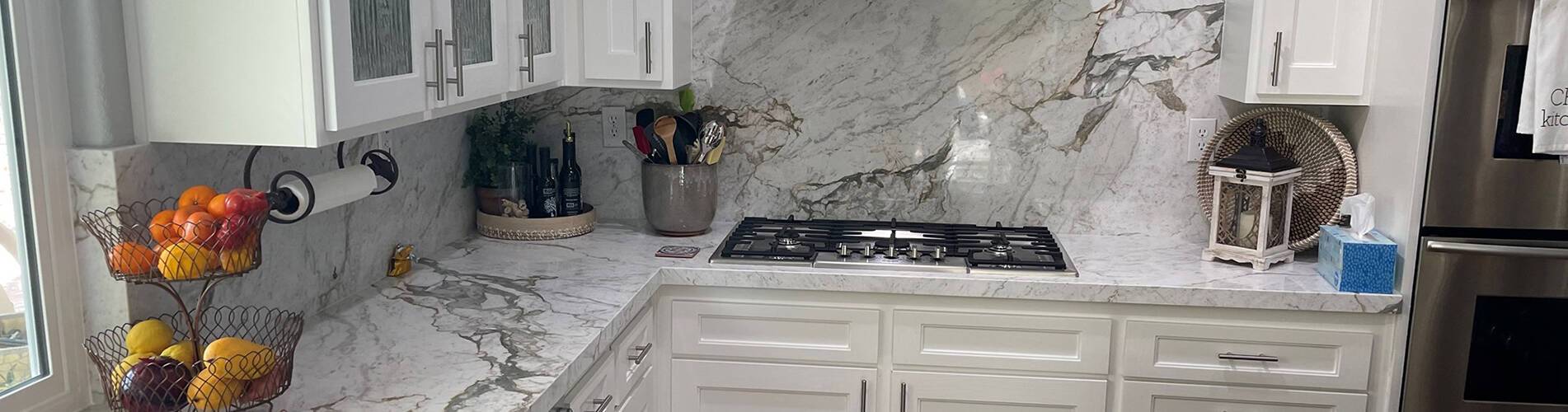
Mana yang lebih awet, marmer atau batu? nite? The Truth About
Long-Term Durability
Choosing the right material for your next project is critical, especially when deciding between two of the most popular natural stones: marble and granite . Both stones are highly prized for their beauty and timeless appeal, but when it comes to longevity, which one truly stands the test of time? In this article, we’ll explore the differences between marble and granite, focusing on their durability, maintenance, and long-term value.
When it comes to selecting stone for a project, durability is paramount. This article will compare the longevity of marble and granite, helping you determine which is the best choice for your next large-scale architectural or design project. By understanding key performance factors and service life expectations, you can make an informed decision.
Both marble and granite are natural stones, but their formation, composition, and ideal uses differ significantly.
Marble is a metamorphic rock that forms from the recrystallization of limestone under heat and pressure. Its primary component, calcium carbonate, gives it a soft and elegant finish. Marble is highly regarded for its beauty and is often used in high-end residential projects, luxury hotel lobbies, bathrooms, and countertops. While it’s beloved for its classic veining and translucent appearance, it’s more prone to scratching and staining due to its softer nature.
Granite , on the other hand, is an igneous rock formed from cooled magma deep within the Earth. Granite’s composition, which includes minerals like quartz, feldspar, and mica, makes it one of the hardest materials used in construction. It’s resistant to scratches, heat, and stains, making it a top choice for high-traffic areas such as kitchen countertops, commercial flooring, and exterior facades. Due to its dense and durable nature, granite excels in applications that demand long-lasting strength and resilience.
When buyers discuss how long a material will last, it’s important to distinguish between durability and longevity .
Durability refers to a material’s ability to resist wear and tear, while longevity involves its overall service life before it requires significant maintenance, repair, or replacement. In stone, durability often focuses on scratch resistance, heat resistance, and impact resistance, while longevity considers how well a material holds up over time under regular use and environmental conditions.
As a professional, you’re likely concerned about performance factors such as resistance to abrasion, staining, heat, and moisture. When selecting marble or granite, you must also consider its installation in specific environments—whether it’s an outdoor setting, high-traffic commercial space, or a residential home. These factors will play a critical role in determining how long the material will maintain its functional and aesthetic appeal.
The lifespan of stone varies significantly depending on the application. For instance, in a low-traffic setting such as a luxury bathroom, marble may last many decades without issue. However, in a high-traffic commercial area like an airport terminal or shopping mall, granite is likely the better choice due to its superior resistance to scratching, staining, and wear.
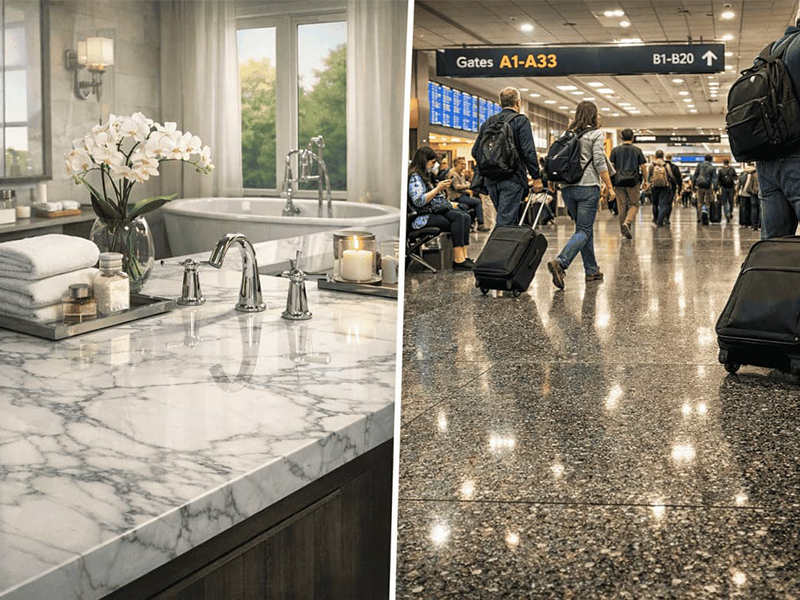
When it comes to selecting the right stone for your project, understanding their durability is key.
The Mohs scale marble vs granite comparison is clear: granite is harder. Granite ranks between 6-7 on the Mohs scale, while marble typically ranks between 3-5. This means granite is far more resistant to scratches and wear from daily use. For example, in high-traffic areas, granite will maintain its polish longer, whereas marble may begin to show signs of wear, particularly on surfaces like countertops or floors.
Granite has a distinct advantage in terms of its impact resistance . Due to its dense structure, granite can withstand heavy loads and impacts, making it ideal for countertops and flooring in both residential and commercial projects. On the other hand, marble, while strong, is more prone to cracking or chipping under impact. For example, in a bustling restaurant kitchen, a heavy pot or pan could chip a marble countertop, whereas granite would endure this impact without damage.
Granite excels in high-traffic environments, such as marble vs granite for commercial flooring . Granite’s abrasion resistance makes it suitable for areas like hotel lobbies, shopping malls, and other public spaces. Its high density also makes it better for outdoor applications. In contrast, marble’s softness makes it less suitable for areas with heavy foot traffic or outdoor exposure, as it can stain or etch when exposed to harsh weather or frequent use.
Both marble and granite have certain resistance factors that directly impact their durability and long-term performance.
As mentioned earlier, granite’s harder composition makes it more resistant to scratches and abrasions. In high-use settings like kitchen countertops, this characteristic is crucial, as a granite surface will maintain its pristine appearance for longer. Marble, with its softer composition, is more susceptible to scratches from sharp objects and abrasive materials.
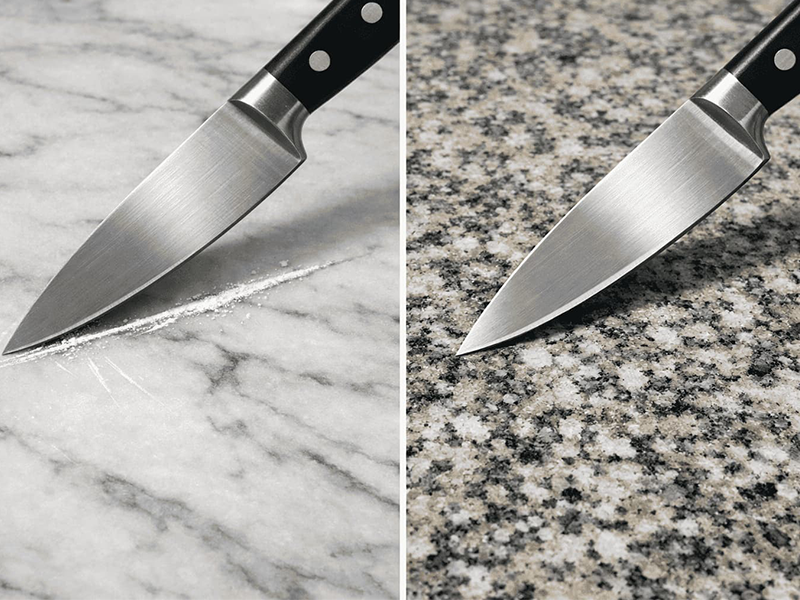
Both stones are heat resistant, but granite has a slight edge over marble in this category. In kitchen environments, granite can withstand hot cookware without sustaining any damage. Marble, while also heat resistant, can be more susceptible to heat-related damage if exposed to sudden temperature changes, such as placing a hot pan directly on the surface.
Granite is naturally less porous than marble, which means it is better at resisting moisture absorption. In outdoor settings or humid environments, granite’s low porosity helps prevent staining, cracking, and damage from freeze-thaw cycles. Marble’s higher porosity makes it more susceptible to moisture absorption, which can lead to staining or discoloration, particularly in outdoor environments or areas exposed to water.
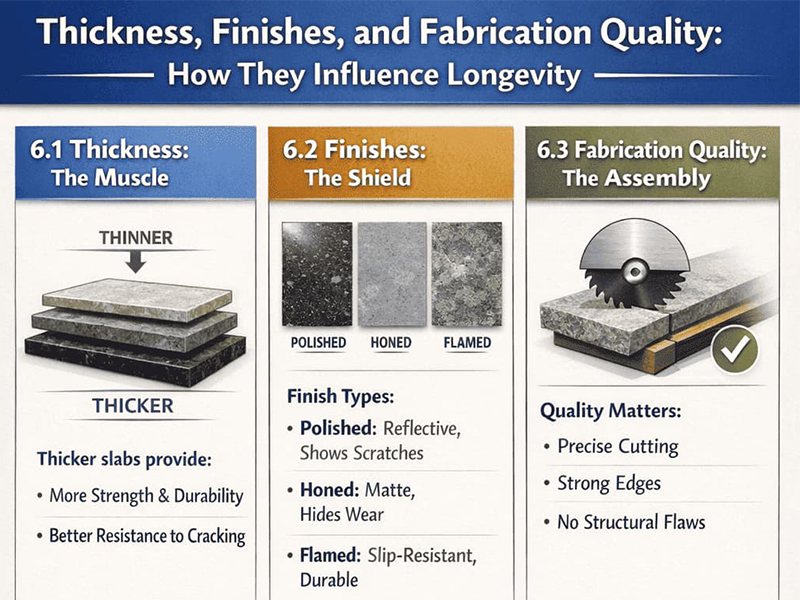
The longevity of both marble and granite can be significantly impacted by their thickness, surface finish, and fabrication quality.
Thicker slabs of both marble and granite provide added strength and resistance to cracking and damage. For heavy-use commercial spaces or exterior installations, opting for thicker slabs will ensure your stone holds up to the pressures of daily wear and environmental stresses. Choosing the right Stone Thickness for your project is an essential consideration for maximizing the material's lifespan.
The finish of the stone also plays a role in its longevity. Polished surfaces are highly reflective and beautiful, but they tend to show scratches and etching more easily. A honed or matte finish can be a better choice for high-traffic areas, as it will better hide minor wear. For outdoor applications, a flamed or brushed finish provides added slip resistance and durability.
The quality of fabrication is equally important. Well-fabricated marble or granite slabs are less likely to have weak spots, cracks, or inconsistencies. Precision cutting and proper edge treatment can help prevent chips, cracks, or structural failures over time, ensuring the stone maintains its integrity for years.
While both marble and granite come with initial material and installation costs, their long-term value depends on various factors.
Generally speaking, marble tends to be more expensive than granite at the outset, especially for premium types like Carrara or Calacatta. Granite’s availability in a wider variety of grades may make it a more cost-effective option, but the price can also vary depending on the source and complexity of the installation.
When considering long-term costs, granite is usually more cost-effective. Its lower maintenance requirements and ability to resist wear and tear result in lower overall lifecycle costs. On the other hand, while marble may need more frequent sealing, polishing, and repairs, its aesthetic appeal can justify the additional cost in certain luxury applications.
For commercial buyers, the ROI of a material like granite—due to its low maintenance and long-lasting durability—often outweighs the initial cost. In contrast, marble can be a better option in design-focused projects where appearance takes precedence, provided its maintenance and repair costs are factored into the overall project budget.
Choosing between marble and granite depends on several factors.
Start by assessing the project’s performance needs. If the stone will be subjected to high traffic, heavy use, or outdoor exposure, granite is likely your best choice. For aesthetic-driven applications where the stone will not face heavy wear, marble may be the better option.
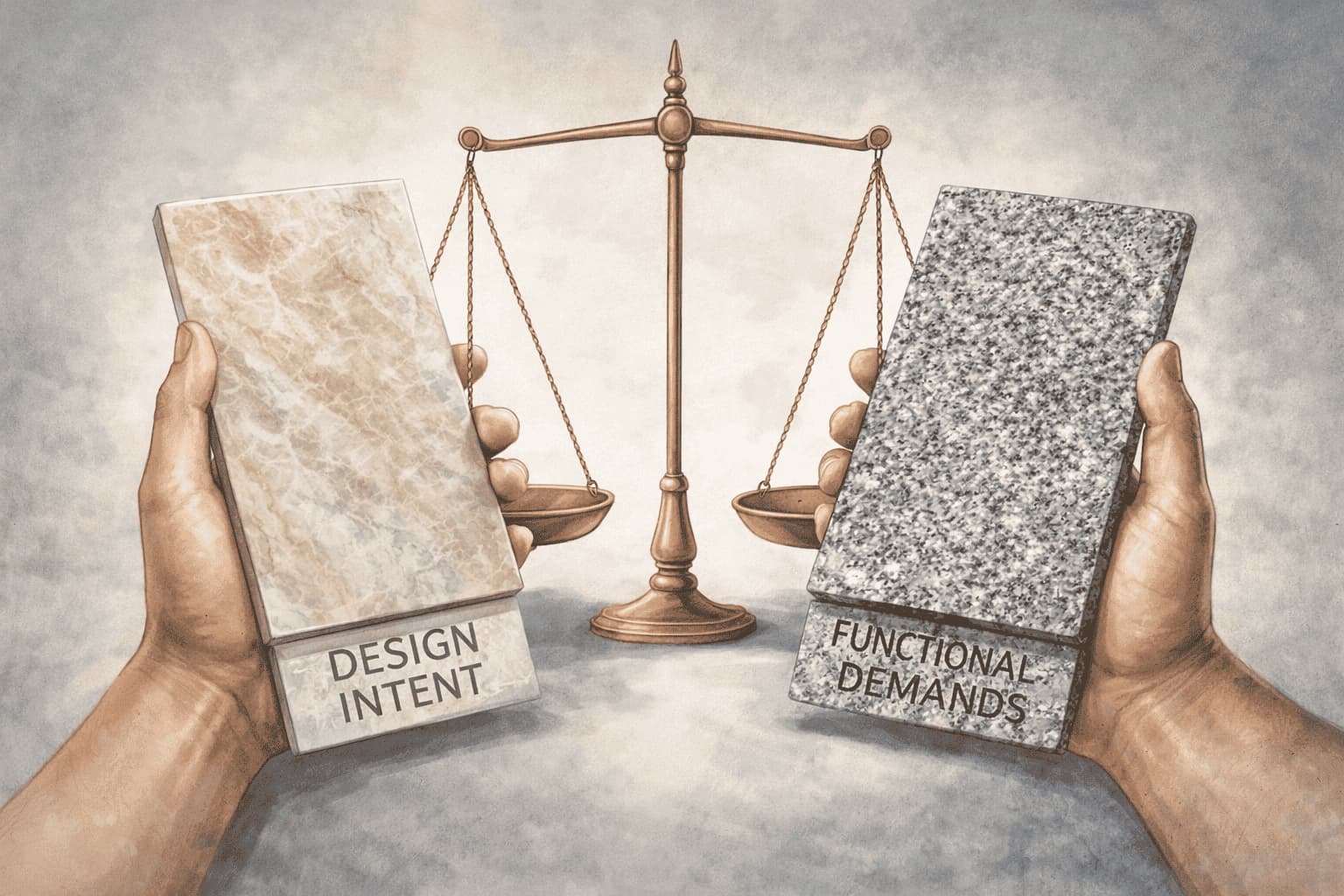
While marble is often chosen for its luxurious appearance and visual appeal, granite is a practical choice for surfaces that need to endure daily wear. Balancing design intent with functional demands is essential for selecting the right material.
Sourcing high-quality marble or granite requires careful consideration of the supplier's reliability, product consistency, and ability to meet your project deadlines. For international buyers, it’s crucial to work with a trusted supplier who can provide detailed technical specifications, ensuring that the stone meets ASTM stone durability standards for your specific use case.
If you want a clear, practical guide for evaluating marble before you commit, share this with your team: Premium Quality Marble . It breaks down how to identify better-grade marble and avoid costly surprises—especially helpful when you’re balancing aesthetics, durability expectations, and supplier reliability.
Yes, granite is generally more durable and resistant to environmental factors like weathering, staining, and freeze-thaw cycles. Marble is better suited for indoor, low-traffic applications.
Granite is the best choice due to its superior resistance to abrasion and wear.
Marble maintenance requirements are more frequent than granite. Marble should be sealed annually, while granite may require sealing every 2-5 years depending on the variety.
No, marble's inherent softness makes it more prone to scratches and stains, even with maintenance. Granite offers superior long-term durability.
Granite performs better due to its lower porosity and resistance to moisture.
Yes, granite’s durability and lower maintenance costs make it more cost-effective in high-traffic applications.
Thicker slabs of both marble and granite offer increased strength and resistance to cracking, making them more durable for high-use projects.
Some engineered alternatives, like quartz, are more stain-resistant but lack the heat and scratch resistance of granite. However, they can be more durable than marble in some cases.
Kategori
Blog baru
 ROOM 205,NO.45, MIDDLE HAIJING ROAD,XIAMEN,AREA OF PILOT FREE TRADE ZONE(FUJIAN)OF CHINA
Untuk Pertanyaan tentang produk atau daftar harga kami, silakan tinggalkan kepada kami dan kami akan berhubungan dalam 24 jam.



© hak cipta: 2026 XIAMEN EXCELLENT STONE CO.,LTD. Seluruh hak cipta.

Jaringan IPv6 didukung