Indonesia




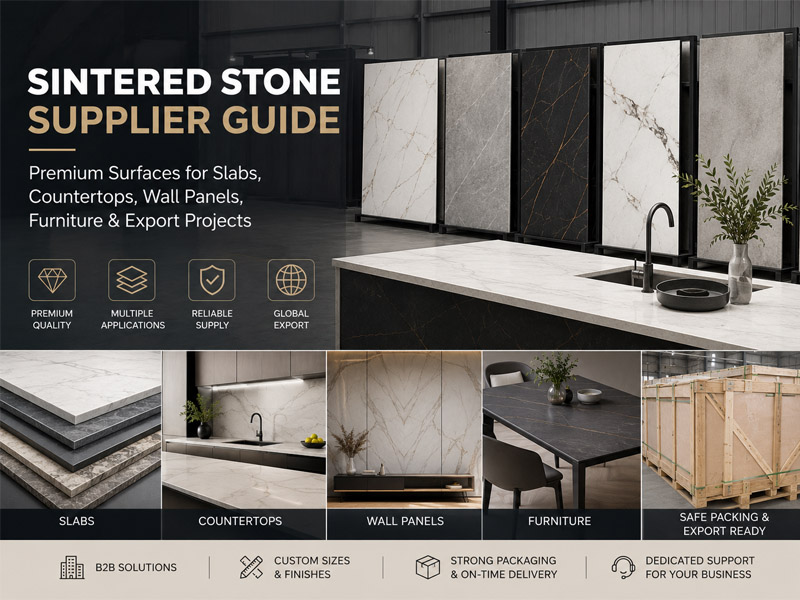
Panduan pemasok batu sinter untuk lempengan, meja dapur, panel dinding, furnitur, dan proyek ekspor.
Panduan ini ditulis untuk importir, distributor, pembuat meja dapur, studio dapur, kontraktor, pembeli proyek hotel, pabrik furnitur, merek kabinet, arsitek, dan penentu spesifikasi komersial. Banyak dari pembeli ini sudah bekerja dengan kuarsa, granit, marmer, lempengan porselen, ubin keramik, permukaan padat, kaca, HPL, atau panel MDF.
Batu sinter menjadi menarik ketika pembeli menginginkan permukaan yang menggabungkan desain format besar, penyerapan air rendah, ketahanan panas, ketahanan terhadap noda, dan estetika tampilan batu modern. Namun, memilih pemasok berbeda dengan membeli lempengan atau ubin tradisional. Pemasok harus memahami tidak hanya materialnya, tetapi juga aplikasinya.
Untuk pengantar dasar, baca panduan kami tentang apa itu batu sinter Untuk membandingkan format dan hasil akhir yang tersedia, telusuri halaman kami. koleksi lempengan batu sinter .
| Aplikasi | Bahan-Bahan yang Sudah Usang Sedang Diganti | Mengapa Pembeli Mempertimbangkan Batu Sinter |
|---|---|---|
| Meja dapur | Kuarsa, granit, marmer, permukaan padat | Tahan panas, daya serap rendah, desain menyerupai batu. |
| Dinding kamar mandi dan panel pancuran | Ubin keramik, lempengan porselen, marmer | Format besar, lebih sedikit sambungan, lebih mudah dibersihkan. |
| Pelapis dinding dan dinding aksen | Lempengan porselen, ubin keramik, batu alam | Kontinuitas desain, efek premium |
| Permukaan meja dan furnitur | Marmer, kaca, lempengan keramik, HPL, MDF | Tahan noda, tahan panas, ukuran sesuai pesanan |
| Konter komersial | Kuarsa, permukaan padat, granit | Daya tahan, perawatan rendah, tampilan mewah. |
Batu sinter dapat menggantikan kuarsa dalam banyak proyek pembuatan meja dapur, tetapi tidak boleh diperlakukan seperti kuarsa selama proses pembuatannya. Batu sinter padat, keras, dan sangat tahan di permukaannya. Namun, karena tidak bergantung pada pengikat resin seperti halnya kuarsa, batu sinter bisa lebih rapuh di bagian tepi, sudut, dan area potongan jika diproses secara tidak benar.
Pemasok yang berkualitas harus memahami fabrikasi meja dapur dari batu sinter, bukan hanya perdagangan lempengan batu. Tanyakan apakah mereka mendukung atau dapat memandu fabrikasi dengan mata pisau berlian, pemotongan CNC, pemotongan waterjet, lubang untuk wastafel, lubang untuk kompor, lubang keran, tepi yang dipoles, tepi miring, dan pulau dapur model air terjun.
Jangan menilai pemasok hanya berdasarkan sampel warna kecil. Untuk proyek meja dapur, mintalah sampel tepi, sampel potongan, dan sampel tepi miring. Ini akan menunjukkan apakah lempengan mudah pecah, apakah warna badan di tepi dapat diterima, dan apakah pemasok memahami risiko sebenarnya yang terkait dengan meja dapur.
Pemilihan ketebalan juga sangat penting. Untuk meja dapur berbahan batu sinter, lempengan setebal 12 mm atau lebih biasanya lebih aman untuk permukaan kerja fungsional. Jika pembeli bersikeras menggunakan lempengan setebal 9 mm atau lebih tipis, pemasok harus menyediakan sistem penyangga yang jelas, seperti penyangga sarang lebah aluminium, papan penguat, lapisan bawah batu, atau penyangga granit. Pemasok yang merekomendasikan lempengan tipis untuk meja dapur tanpa membahas penguatan, radius sudut internal, penyangga overhang, atau pengendalian pengelupasan tepi dapat menimbulkan risiko pemasangan dan purna jual.
Ukuran dan ketebalan lempengan adalah dua faktor penting yang memengaruhi harga batu sinter. Untuk pemilihan ukuran, lihat panduan kami. blog tentang ukuran lempengan batu sinter Untuk memahami tingkat biaya secara umum, bandingkan spesifikasi dengan spesifikasi kami. panduan harga batu sinter .
Beralih dari lempengan porselen atau ubin keramik ke batu sinter bukan hanya peningkatan material. Hal ini mengubah jangkauan aplikasi, metode pengolahan, dan persyaratan pemasok.
Lempengan porselen umumnya digunakan untuk dinding, lantai, dan pelapis dekoratif. Batu sinter juga dapat digunakan untuk area ini, tetapi penggunaannya lebih luas lagi untuk meja dapur, furnitur, meja rias, wastafel terintegrasi, meja komersial, dan permukaan fabrikasi lainnya. Ini berarti pemasok yang hanya memiliki pengalaman penjualan panel keramik format besar mungkin tidak cukup.
Pembeli harus memverifikasi struktur bodi, tampilan tepi, data teknis, dan kemampuan pemrosesan. Mintalah foto potongan tepi, sampel sisi, lempengan fisik, dan laporan pengujian. Periksa apakah pemasok dapat menjelaskan perbedaan antara lempengan yang dicetak permukaannya, opsi bodi penuh, dan efek visual melalui bodi. Ini penting untuk tepi yang terlihat, tangga, permukaan meja, sudut miring, dan pulau air terjun.
Jangan hanya mengandalkan nama produk seperti "lempengan porselen besar" atau "batu sinter". Mintalah bukti melalui sampel, tampilan samping, potongan tepi, dan data kinerja. Untuk perbandingan material, bacalah batu sinter vs porselen Untuk aplikasi vertikal, bandingkan panel dinding batu sinter .
| Titik Pemeriksaan | Pemasok Lempengan Porselen | Pemasok Batu Sinter |
|---|---|---|
| Peran utama | Dekorasi dinding dan lantai | Dekorasi + fabrikasi fungsional |
| Pengolahan | Memotong dan memasang ubin | Memotong, mengebor, merapikan tepi, memotong miring |
| Aplikasi | Instalasi datar | Meja dapur, dinding, furnitur, wastafel |
| Persyaratan pemasok | Pasokan ubin | Produksi slab + dukungan proyek |
Nilai batu sinter tidak hanya terletak pada lempengan itu sendiri, tetapi juga pada apa yang dapat dihasilkan setelah diproses. Pemasok yang andal harus mendukung pekerjaan pemotongan sesuai ukuran, pemolesan tepi, pengeboran, pembuatan lubang untuk wastafel dan kompor, tepi miring, detail air terjun, perencanaan bookmatch, panel furnitur, gambar kerja, gambar pengolahan, dan optimasi tata letak.
Hal ini penting karena pembeli B2B yang berbeda membutuhkan hasil yang berbeda pula. Pabrik pembuat meja dapur membutuhkan panduan pemotongan dan tepi. Pabrik furnitur membutuhkan ukuran yang berulang dan konsistensi batch. Kontraktor hotel mungkin membutuhkan panel dinding, meja rias, dan meja komersial dari satu program material yang terkoordinasi.
Jika pemasok hanya dapat menjual lempengan utuh tetapi tidak dapat menjelaskan risiko fabrikasi, mungkin cocok untuk pelapis dinding dasar, tetapi tidak untuk meja dapur batu sinter, panel dinding batu sinter, wastafel terintegrasi, furnitur, atau proyek komersial premium. Kemampuan pemrosesan mendalam juga memengaruhi biaya, jadi hal ini harus dipertimbangkan bersama dengan kebutuhan Anda. panduan harga batu sinter .
Jangan menilai pemasok batu sinter hanya berdasarkan foto katalog. Sampel dan data uji sangat penting, terutama untuk proyek B2B, pesanan ekspor, dan aplikasi yang menggantikan material lama.
Data teknis yang dapat diminta meliputi penyerapan air, kekerasan Mohs, kekuatan lentur, ketahanan benturan, ketahanan panas, ketahanan noda, ketahanan UV, ketahanan abrasi, ketahanan selip untuk lantai, peringkat tahan api untuk panel dinding, dan dokumen CE, ISO, ASTM atau EN jika diperlukan.
Pemeriksaan sampel harus lebih dari sekadar warna. Mintalah sampel permukaan, sampel tepi potongan, sampel ketebalan, dan sampel hasil akhir. Untuk lempengan tipis, periksa kinerja lentur atau benturan. Untuk proyek meja dapur, mintalah hasil pengelupasan tepi setelah pemotongan, sampel tepi miring untuk pulau air terjun, dan sampel potongan wastafel. Untuk proyek besar, bandingkan konsistensi warna antar batch sebelum mengkonfirmasi produksi massal.
Serpihan kecil mungkin menunjukkan warna, tetapi tidak dapat menunjukkan bagaimana material tersebut berperilaku selama pemotongan, pengeboran, pembentukan tepi, atau pemasangan.
Pengemasan adalah kemampuan pemasok, bukan layanan kecil. Batu sinter format besar seringkali berukuran besar, tipis, dan sulit ditangani. Pengemasan yang buruk dapat mengubah harga slab yang rendah menjadi biaya proyek total yang tinggi.
Pemasok yang andal harus menyediakan kemasan berbentuk A, peti kayu yang diperkuat, pemuatan vertikal, perlindungan tepi, penyangga anti-tekuk untuk lempengan tipis, kemasan tahan lembap, foto pemuatan, rencana pemuatan kontainer, dokumen ekspor, dan kebijakan penanganan kerusakan yang jelas.
Hal ini sangat penting terutama bagi pembeli internasional, proyek hotel, pengiriman kontainer, dan pesanan campuran yang mencakup lempengan, panel dinding, dan permukaan meja. Pemasok batu sinter profesional seharusnya membantu mengurangi kerusakan pengiriman, bukan hanya menawarkan harga satuan yang rendah. Pengemasan, kebijakan penggantian, dan risiko logistik juga harus dipertimbangkan dalam anggaran Anda.
Berhati-hatilah jika pemasok:
Tanda-tanda peringatan ini penting karena batu sinter bukan hanya panel dekoratif. Batu ini sering digunakan sebagai permukaan fungsional untuk meja dapur, furnitur, dinding, kamar mandi, dan interior komersial. Jika pemasok tidak memahami risiko aplikasinya, pembeli mungkin menghadapi kerusakan, penundaan pemasangan, tampilan tepi yang buruk, atau biaya purna jual yang lebih tinggi.
Pemasok batu sinter yang baik harus dipilih sesuai dengan aplikasinya. Jika proyek tersebut mengganti meja dapur kuarsa, pengetahuan fabrikasi, pemrosesan tepi, dan sistem pendukung sangat penting. Jika mengganti lempengan porselen atau ubin keramik, pembeli harus memverifikasi sifat batu sinter yang sebenarnya dan kemampuan pemrosesan yang lebih dalam. Jika material tersebut digunakan untuk furnitur, panel dinding, atau interior komersial, layanan pemotongan sesuai ukuran, konsistensi batch, pengemasan yang aman, dan dukungan ekspor menjadi penting.
Pilih batu sinter berdasarkan aplikasi, ketebalan, hasil akhir, dan kemampuan pemasok. Untuk meja dapur, lempengan setebal 12 mm atau lebih biasanya direkomendasikan. Untuk panel dinding dan permukaan furnitur, lempengan yang lebih tipis mungkin lebih cocok. Selalu periksa sampel, data teknis, dukungan fabrikasi, dan kemasan sebelum melakukan pemesanan dalam jumlah besar.
Kelebihan:
Kontra:
Untuk mengurangi risiko kerusakan (pecah/pecah):
Tidak. Batu sinter sangat tahan lama dan dapat menawarkan kekuatan lentur yang sangat baik. Namun, seperti batu alam dan porselen, batu sinter dapat retak jika ditangani secara tidak benar, dipasang tanpa penyangga yang memadai, atau terkena benturan terkonsentrasi pada tepi dan sudut. Pembuatan dan pemasangan yang tepat sangat penting.
Hal ini bergantung pada aplikasinya. Batu sinter menawarkan ketahanan panas dan UV yang lebih baik, serta penyerapan air yang lebih rendah, sehingga cocok untuk penggunaan luar ruangan dan permukaan berkinerja tinggi. Kuarsa seringkali lebih mudah diproses dan mungkin menawarkan lebih banyak pilihan warna dan pola.
Untuk proyek yang membutuhkan daya tahan di luar ruangan, ketahanan terhadap panas langsung, dan permukaan berukuran besar, batu sinter seringkali menjadi pilihan yang lebih disukai. Untuk meja dapur dalam ruangan standar dengan persyaratan fabrikasi yang lebih sederhana, kuarsa tetap menjadi pilihan populer.
paragraf CTAHubungi kami untuk spesifikasi slab, sampel, panduan pemotongan, saran pengemasan, dan dukungan penawaran ekspor.
Kategori
Blog baru
 ROOM 205,NO.45, MIDDLE HAIJING ROAD,XIAMEN,AREA OF PILOT FREE TRADE ZONE(FUJIAN)OF CHINA
Untuk Pertanyaan tentang produk atau daftar harga kami, silakan tinggalkan kepada kami dan kami akan berhubungan dalam 24 jam.



© hak cipta: 2026 XIAMEN EXCELLENT STONE CO.,LTD. Seluruh hak cipta.

Jaringan IPv6 didukung